The last time you saw
your grandma before
she died. That work
presentation last
month. Yesterday’s
argument with your
SO. Your performance
eval next quarter.
That damn toast you
agreed to give at the
wedding next
summer. What do they
have in common?

Promovam performanta economica!




Editie electronica a publicatiei tiparite Top Business - fondata 1993, Anul XXVII
nr.2 (889) Februarie 2019
nr.2 (889) Februarie 2019
by prof univ dr. Gabriela Tigu


#together
...how we should prepare ourselves…

Reproducerea oricarei imagini sau oricarui text din acest site se poate face doar cu acordul TopBusinessNews.
Potrivit art 206 Cod Penal responsabilitatea juridica apartine autorilor textelor publicate.
Potrivit art 206 Cod Penal responsabilitatea juridica apartine autorilor textelor publicate.
English Page
PLOVDIV -THE EUROPEAN CAPITAL
OF CULTURE 2019
OF CULTURE 2019
So, dear friends, I invite you to pay attention to this destination, which I was charmed of at first glance. And not just as a tourist, but rather as a specialist.
Have a nice journey to Plovdiv 2109! Good luck, Timisoara 2021!
Romania experienced this program in 2007 through the city of Sibiu, which later demonstrated that it deserved the title of European Capital of Culture and continues to innovate, to reinvent itself as a touristic destination. The next city is, as we already know, Timisoara in 2021. In 2019, however, for the first time Bulgaria, Plovdiv, won the competition surpassing the "rival” VelikoTarnovo, but also the “more titrated” cities Sofia and Varna.
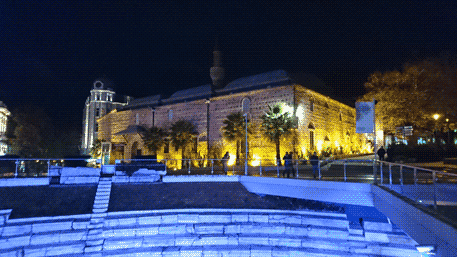
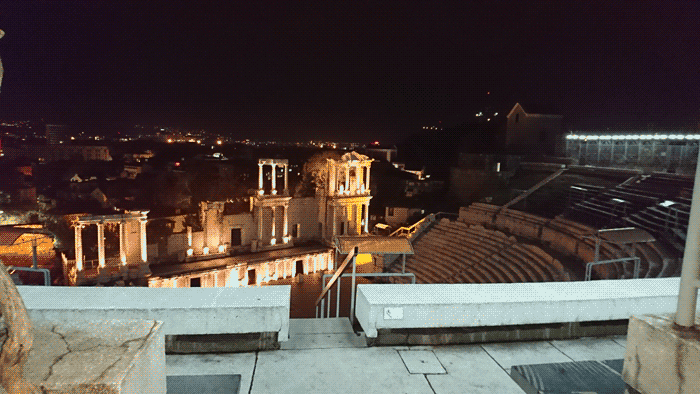
Plovdiv is a well-known destination for Romanian tourists (as well as the whole Bulgaria). A weekend in the area is not necessarily enough, but it gives you the pleasure of discovering the streets of the city center, where underneath, the ruins of the immense roman stadium of impressive size: 240 m long, 50 m wide, capacity 30,000 seats, are emerging. After a recent restoration, it can be partially seen by visitors, even though it lies below the pedestrian area. At the end of the same street, the old Roman amphitheater dating back to the 1st century, attracts tourists not only for the gorgeous images that can be captured, but also for the labyrinth in the slope where you can find a restaurant or a café that seem to be hidden by the passage of time .
Starting with 1985, the European Capital of Culture program has collected 58 titles for many European cities, which have had the chance to demonstrate both cultural value and efforts to preserve and develop cultural values. Thought out to support the local culture of the countries of the European Union and also to encourage intercultural exchanges within the EU, the program has already designated cities that will hold this title until 2033.
Why Plovdiv? ... It is relatively simple: because it is one of the oldest cities in Europe with continuous habitation (some claim it to be the third oldest town after Athens and Argos), it is the largest city founded by the Romans in Thrace, it houses many valuable archaeological evidence in this regard, but beyond all this, because there is desire, enthusiasm, much work and creativity to win this project.
Besides, Plovdiv and the surrounding area include about 200 archaeological sites, like a true outdoor history museum. Of course, the history museums and the archeological ones, the pre-Christian basilica, the small museums or the private collections with historical themes, throughtheir value and the way of capitalizing them, shows the pride of the inhabitants for their historical past. Local guides are very keen to tell, almost endlessly, the history and legends of the place.
But not only old history is being capitalized. There is a charming neighborhood in the old part of the city, with noble houses from the second half of the nineteenth century, restored, managed by local authorities or even by the owners and included in the touristic circuit, where architecture can be admired specific art objects, gorgeous gardens and well-preserved wine collections, sometimes hidden by tourists sightin cellars or wine cellars, but proudly exposed to various cultural or enological events. Let's not forget, the region of Plovdiv has good quality wines and recognized wine cellars.
Even sports lovers and outdoor recreational activities are not forgotten. There are various possibilities in town and surroundings, even if nature is not as generous as in other cities such as Sofia or VelikoTarnovo.
Even sports lovers and outdoor recreational activities are not forgotten. There are various possibilities in town and surroundings, even if nature is not as generous as in other cities such as Sofia or VelikoTarnovo.
And to get the 2019 European Capital of Culture right, the calendar of events for this year in Plovdiv is extremely rich, trying to meet the expectations of both tourists and their own people - who should be the first to benefit from this honorary title. An aspect to be retained is the fact the theme of the events expresses with great precision the local cultural specificity and does not attempt to copy from the international experience.
But, beyond all of these attractions, as we announced at the outset, the desire and enthusiasm of locals and authorities to show the whole world their city are the ones that make the difference. I met such people here, at the tenth edition of the International Meeting of Tourism, an event organized with the support of the City Hall and the Ministry of Tourism, by the enthusiastic team of the Plovdiv - European Capital of Culture project. I emphasize ... the tenth edition!
In other words, Plovdiv has been preparing for ten years, inviting travel journalists from all over the world, tour operators, other business partners, for the conference, business-to-business meetings, city tours and professional visits, to advertise the local projects for the preparation of the great event in 2019. Even if they changed the logo of the event, the marketing plan or the calendar of events, all these conferences attracted supporters from various countries of the world who certainly have the ability to generate tourist flow to Plovdiv in the years to come. It's about tourist promotion, nothing simpler.

If you have
considered giving
up coffee for your
health, here’s a
counterargument:
don’t. A new study,
published in the
European Journal of
Nutrition (it’s
probably behind the
counter at your
local newsstand),
shows that drinking
dark coffee protects
your DNA from
breaking. Yes, that
means I’m immortal
now.
You can overthink the hell out of them.
We all do it, and most of the time it’s relatively harmless. We churn over what we should have said or over-plan what we should do, and then we move on. It’s annoying, but most of the time it’s no more stressful than an earworm song you can’t get out of your head or a nagging discussion you wish you could redo.
more
We all do it, and most of the time it’s relatively harmless. We churn over what we should have said or over-plan what we should do, and then we move on. It’s annoying, but most of the time it’s no more stressful than an earworm song you can’t get out of your head or a nagging discussion you wish you could redo.
more
How To Stop Overthinking Everything,
According To Therapists
According To Therapists
Drink up, because
dark-roast coffee protects your DNA from damage
dark-roast coffee protects your DNA from damage