Promovam performanta economica!




Editie electronica a publicatiei tiparite Top Business - fondata 1993, Anul XXVII
nr. 11 (898) Noiembrie 2019
nr. 11 (898) Noiembrie 2019
International

Reproducerea oricarei imagini sau oricarui text din acest site se poate face doar cu acordul TopBusinessNews.
Potrivit art 206 Cod Penal responsabilitatea juridica apartine autorilor textelor publicate.
Potrivit art 206 Cod Penal responsabilitatea juridica apartine autorilor textelor publicate.
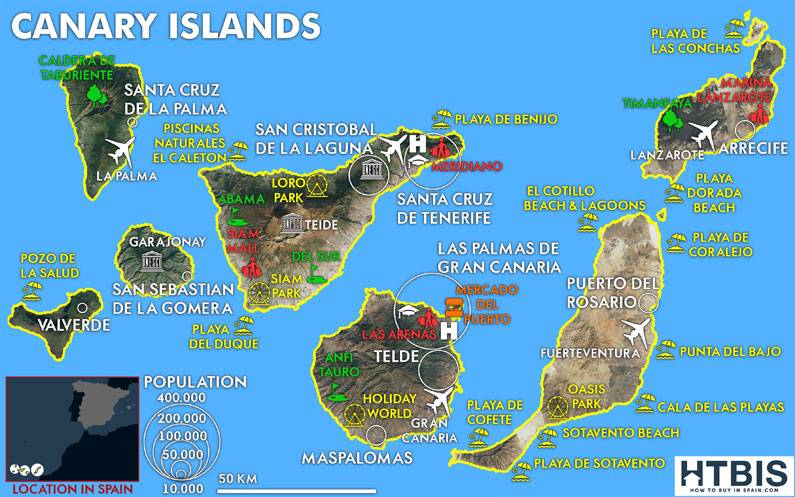
Canary Islands - Tenerife
A joyful invitation from FIJET Spain
to FIJET Romania
After the visit of FIJET Spain members, in June this year, in Romania, upon
which they were pleasantly surprised by what the Danube Delta, this
unique land which doesn’t stop amazing any tourist, traveler or connoisseur,
geologist, biologist, professional photographer or professional journalist, can
offer, it is a great pleasure to honor the invitation that our colleagues from
FIJET Spain addressed the Romanian members of FIJET,to Tenerife. The
expedition will take place in December 2019. Thus, we will present some
general data on the Canary Islands and Tenerife in the present article,
followed by future articles and images related to the visit to one of the most
beautiful places on Earth. FIJET Spain (Federación Internacional de
Periodistas y Escritores de Turismo) has 33 members and is chaired by
Miguel Angel González Suárez.
The Canary Islands are known as Europe’s sun-trap, and for their mild
temperatures and outstanding natural surroundings. In fact, five of the
islands (El Hierro, La Palma, La Gomera, Fuerteventura, and Lanzarote), the
western half of Gran Canaria, and the Anaga Massif in Tenerife, are official
Biosphere Reserves. The archipielago also has four National Parks.
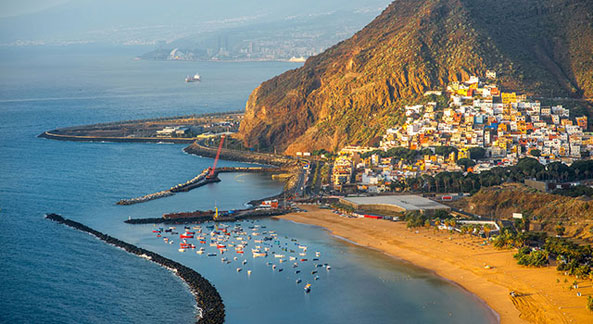
Its beaches are its most outstanding attractions, and are perfect for relaxing
in the sun or enjoying water sports such as windsurfing and scuba diving. In
the interior you’ll find amazing landscapes which are ideal for hiking, cycle
touring, rock climbing and even caving. Some of the most spectacular
include the volcanic landscapes of Lanzarote, the beaches of Fuerteventura
and Gran Canaria with their sand dunes, the green forests of La Palma and
La Gomera and the peace and quiet of La Graciosa.
The Canary Islands also offer a range of cultural options to explore,
including the monumental site at San Cristóbal de La Laguna, which has
been awarded the World Heritage designation by the UNESCO, and the work
of César Manrique in Lanzarote. If you’re going in February you’ll also be
able to enjoy the spectacular Carnival in Santa Cruz de Tenerife.
Scented pine forests, haunting volcanoes, lunar-like landscapes, secret
sandy coves, miles of Sahara-style dunes, beach-hugging resorts - the
beautiful, unique Canary Islands wear many tantalising hats.
Otherworldly Landscapes
Marvel at the pine-forested peaks of Gran Canaria’s mountainous interior,
the tumbling waterfalls of La Palma or the subtropical greenery of La
Gomera’s Parque Nacional de Garajonay. Then contrast all this lushness
with the extraordinary bare flatlands flanking Tenerife’s El Teide, the
surreal party of colours glittering across Lanzarote’s lava fields, the gentle
flower-filled hillsides of El Hierro, and Fuerteventura’s endless cacti-
sprinkled plains. The Canary Islands’ near-perfect temperatures mean that,
year-round, you can soak up fantastical, varied landscapes otherwise only
found by crossing continents.
The Great Outdoors
It’s this very diversity that makes outdoor pursuits such an easily accessible
and key pleasure of the Canaries. Hike the many footpaths criss-crossing
the islands, from meandering coastal trails to challenging mountain treks to
tranquil forest walks; go diving or snorkelling in blissfully warm waters
inhabited by more than 350 species of fish (and the odd shipwreck); or pump
up the adrenaline by riding the wind and the waves - kitesurfing,
windsurfing, surfing and paragliding are all big here. Then slow things down
with horse rides, boat trips, kayaking and paddle-boarding jaunts or
beachfront yoga.
Art & Architecture
Contrary to many expectations, the Canary Islands are immensely rich in
both original art and architecture - sometimes you just need to know where
to look. The spectacular surrealist canvases of world-acclaimed painter
Óscar Domínguez grace his Tenerife homeland; the enormous abstract
sculptures of Martín Chirino are impossible to miss on Gran Canaria; and
César Manrique’s inspired ‘interventions’ pop up all over Lanzarote (and
beyond). Everywhere, seek out the emblematic wooden balconies, leafy
internal patios and cheerily painted facades that typify vernacular Canarian
architecture, and pop into charming palm-shaded churches, many of which
date back several centuries.
Tourism in Canary Islands - statistical data
Statistic data taken from https://es.statista.com/temas/4115/el-turismo-en-
canarias/ - published by A. Diaz, 23 July, 2019
The Canary Islands is, after Catalonia and the Balearic Islands, the third
preferred autonomous community among international tourists visiting
Spain. This archipelago of volcanic origin off the coast of Morocco and
Western Sahara has become almost a place of pilgrimage for tourists from all
over Europe, especially from the United Kingdom and Germany. Its
subtropical climate and its cultural and landscape richness make the
„Fortunate Islands” a perfect tourist destination, something that the local
population has learned to exploit very well. Such is the importance of
tourism for the regional economy, that the sector generates more than 40%
of employment and its contribution to the GDP exceeds 35%.
As in any other tourist destination, the hotel sector plays a very important
role in the Canary Islands. Without going any further, around 60% of the
tourists who come to the islands opt for a hotel establishment most 4 stars
to stay during their stay. In addition, room occupancy rates are only below
80 per cent throughout the year. As for the most popular destinations, the
two main islands stand out over the rest. Not surprisingly, Tenerife and
Gran Canaria record the majority of overnight stays in the archipelago, as
well as the highest Adrs and Revpar.
But the Canary Islands not only benefit from the arrival of tourists from
abroad, but also the local population contributes to their own economic
development. The inhabitants of the archipelago travel both on their island
of residence and on the other six and, like outsiders, visit mainly Gran
Canaria and Tenerife. The average stay is about four days and the annual
expenditure amounts to about 1.9 billion euros. Among the most visited
municipalities are San Bartolomé de Tirajana and Mogán, in Gran Canaria,
and Adeje, in Tenerife.
El turismo en Canarias - Datos estadísticos
Canarias es, tras Cataluña y las Islas Baleares, la tercera comunidad
autónoma preferida entre los turistas internacionales que visitan España.
Este archipiélago de origen volcánico situado frente a las costas de
Marruecos y el Sáhara Occidental se ha convertido casi en lugar de
peregrinación para turistas de toda Europa, especialmente del Reino Unido y
Alemania. Su clima subtropical y su riqueza cultural y paisajística hacen de
las „islas Afortunadas” un destino turístico perfecto, algo que la población
local ha aprendido a explotar muy bien. Tal es la importancia del turismo
para la economía regional, que el sector genera más del 40% del empleo y
su aportación al PIB supera el 35%.
Como en cualquier otro destino turístico, el sector hotelero juega un papel
muy importante en Canarias. Sin ir más lejos, alrededor del 60% de los
turistas que llegan a las islas opta por un establecimiento hotelero -la
mayoría de 4 estrellas- para alojarse durante su estancia. Además, el grado
de ocupación por habitaciones apenas baja del 80% durante todo el año. En
cuanto a los destinos más populares, las dos islas principales destacan sobre
el resto. No en vano, Tenerife y Gran Canaria registran la mayoría de las
pernoctaciones realizadas en el archipiélago, así como los ADR y RevPAR
más altos.
Pero las islas Canarias no solo se benefician de la llegada de turistas del
exterior, sino que la población local también contribuye a su propio
desarrollo económico. Los habitantes del archipiélago realizan viajes tanto
en su isla de residencia como en las seis restantes y, al igual que los
forasteros, visitan sobre todo Gran Canaria y Tenerife. La estancia media es
de unos cuatro días y el gasto anual asciende a cerca de 1.900 millones de
euros. Entre los municipios más visitados, destacan San Bartolomé de
Tirajana y Mogán, en Gran Canaria, y Adeje, en Tenerife.
Diana DUMITRU

NBR:
International reserves -
October 2019
On 31 October 2019, the National Bank of Romania’s foreign
exchange reserves stood at EUR 34,908 million, compared to
EUR35,423 million on 30September2019.
During the month, the following flows were recorded:
EUR 559 million worth ofinflows representing changes in
credit institutions’foreign currency-denominate drequired
reserves, inflows into the Ministry of Public
Finance’saccounts, inflows into the European Commission’s
account and other;
EUR 1,074 million worth of outflows representing changes
in credit institutions’ foreign currency-denominated
required reserves, interest payments and principal
repayments on foreign currency public debt, and other.
The gold stock remained steady at 103.6 tonnes. However,
following the change in the international price of gold, its
value amounted to EUR 4,492 million.
On 31 October 2019, Romania’sinternational reserves
(foreign currencies and gold) stood at EUR 39,400 million,
compared to EUR 39,963 million on 30 September 2019.
During November 2019, the payments due on the foreign
currency-denominated public and publicly guaranteed debt
amount to approximately EUR 1,648 million.
Notes:
The series of indicators (available from April 2005) can be
accessed in different formats (html, xls, xml and csv) in the
interactive database at: http://www.bnr.ro/Interactive-
The next press release on international reserves will be
issued on 2December2019.See the release calendar at:
http://www.bnr.ro/News-calendar-3204.aspx
Press release archive: http://www.bnr.ro/Press-Releases--